

Savor a flavorful Japanese miso stir fry with pork & eggplant that's easy & quick to make. Perfect for a tasty weeknight dinner in minutes!
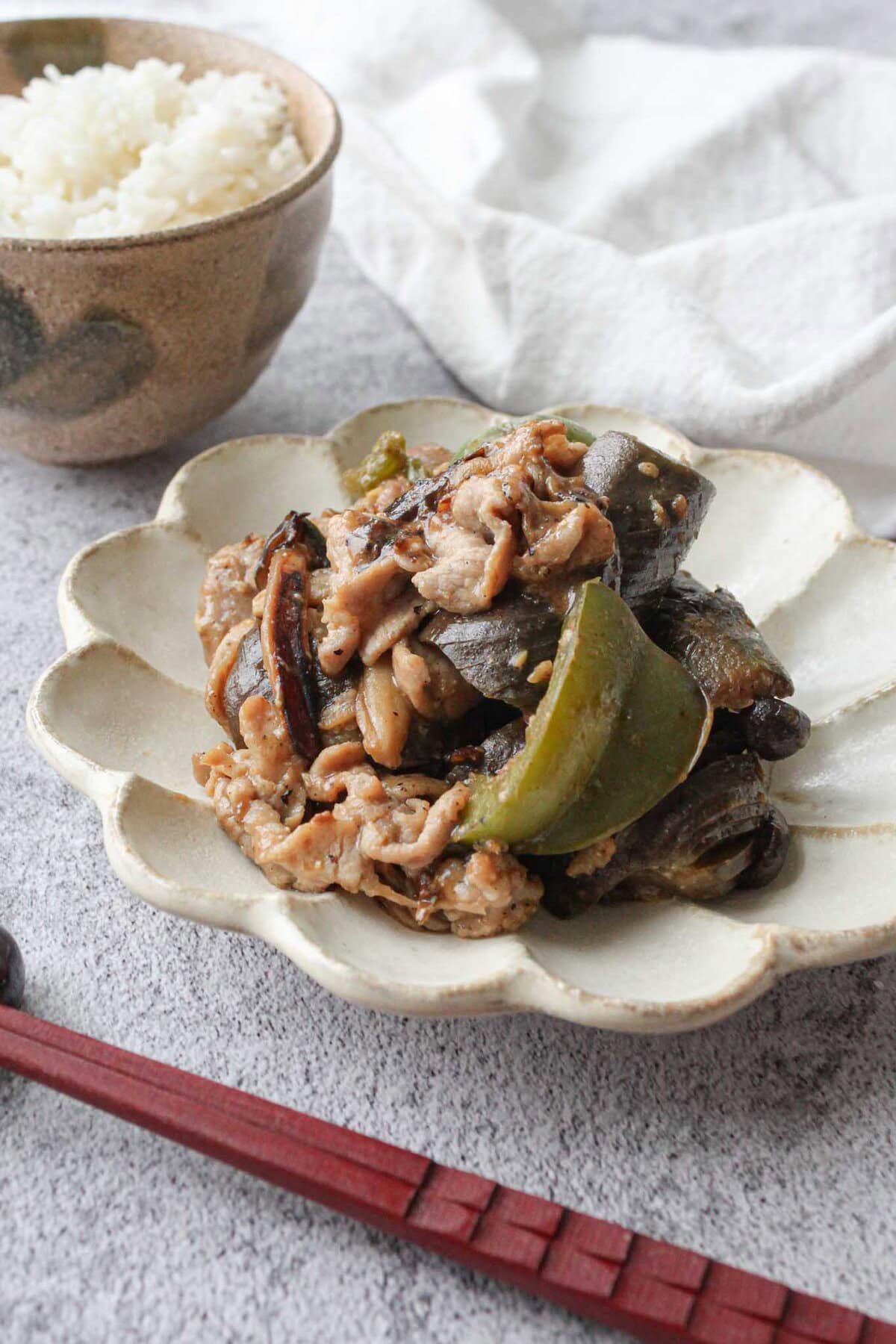
If you love tender, melt-in-your-mouth eggplant and juicy pork coated in sweet and savory miso, this Japanese miso stir-fry is for you. I always get hungry while cooking because of the aroma of the slightly charred miso.
This stir-fry is quick to make and incredibly versatile. You can use any veggies or protein you have and adjust the flavors with extras like butter or toban djan. Pair it with a comforting bowl of soup or refreshing sides like Japanese tomato salad and Japanese potato salad for a complete ichiju-sansai meal.
Perfect for a busy weeknight or a flavorful fridge-cleanout dinner, this Japanese miso stir-fry is a recipe you’ll want to make again and again.
Watch How to Make Japanese Miso Stir-Fry
Why You'll Love This Recipe
- Perfect with rice: Like Oreo is called milk’s best friend, I call this stir-fry rice’s best friend! The sweet-savory flavor, a little oil from the pork, and the soft, melting eggplant… everything pairs perfectly with rice. Don’t forget to prep your rice ahead!
- Quick and easy: Once all the components are ready, it’s just a quick stir and you’re done. Ideal for busy weeknight dinners.
- Super versatile: Eggplant and pork are my favorite combo, but feel free to swap in other proteins or veggies. It’s a great way to use up whatever’s in your fridge!
Notes on Ingredients
See the recipe card for the full ingredients list.
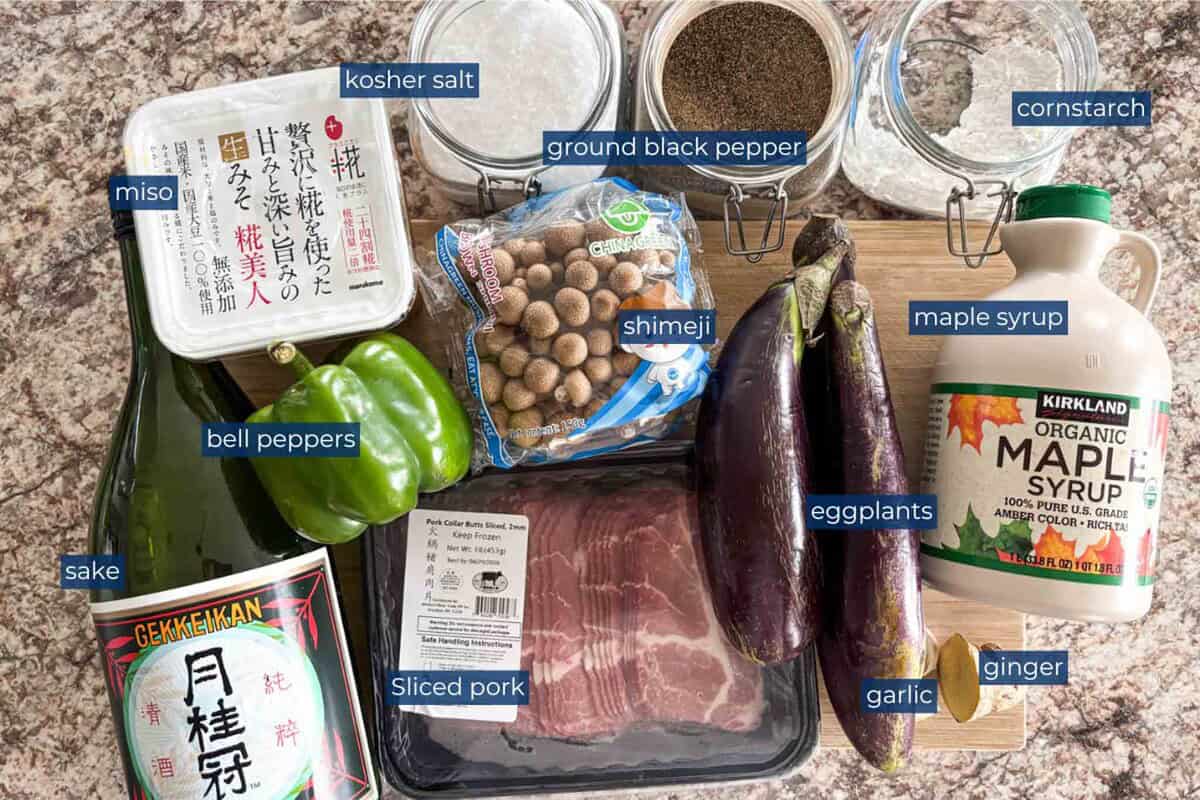
- Miso: Use whichever type you like. White miso is sweeter and red miso is saltier, so adjust the amount to your taste.
- Sliced pork: I like pork collar or shoulder for its perfect balance of fat and meat, but you can easily swap in other meats or plant-based proteins.
- Eggplant: Japanese, Chinese, or Filipino eggplant works best. American eggplant tends to be too dense for this stir-fry.
- Sake: Here, sake hydrates the pork, adds steam without making the pan soggy, and boosts umami in the sauce. I don’t recommend swapping it with water.
- Veggies: Feel free to use whatever you have on hand! Just avoid watery veggies like tomatoes, which can make the stir-fry soggy.
💡You can find these ingredients at Japanese or Asian grocery stores, or online at Amazon or Weee!
How to Make Japanese Miso Stir-Fry
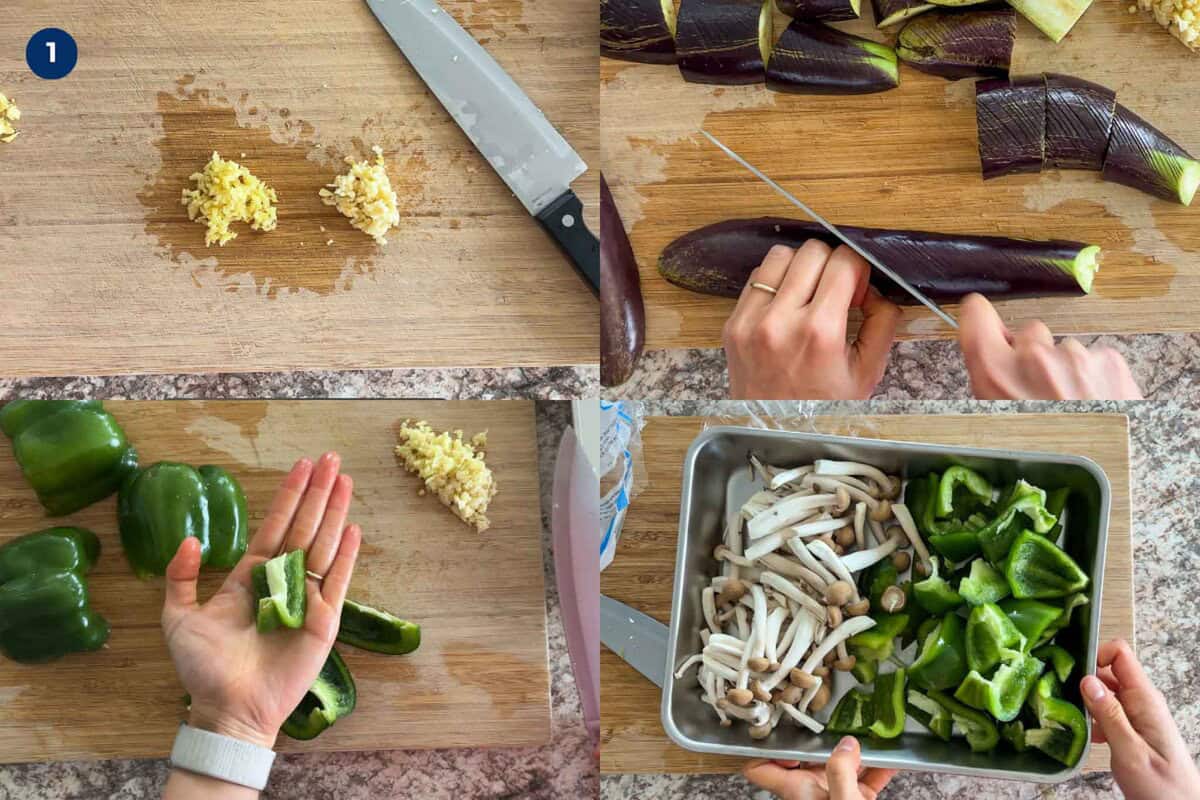
- Mince garlic and ginger. Cut bell peppers into ~3 cm pieces. Separate shimeji mushrooms and remove stems. Slice eggplants in half lengthwise, make shallow diagonal cuts on the skin, cut into ~5 cm pieces, soak in water 5 min, then pat dry.
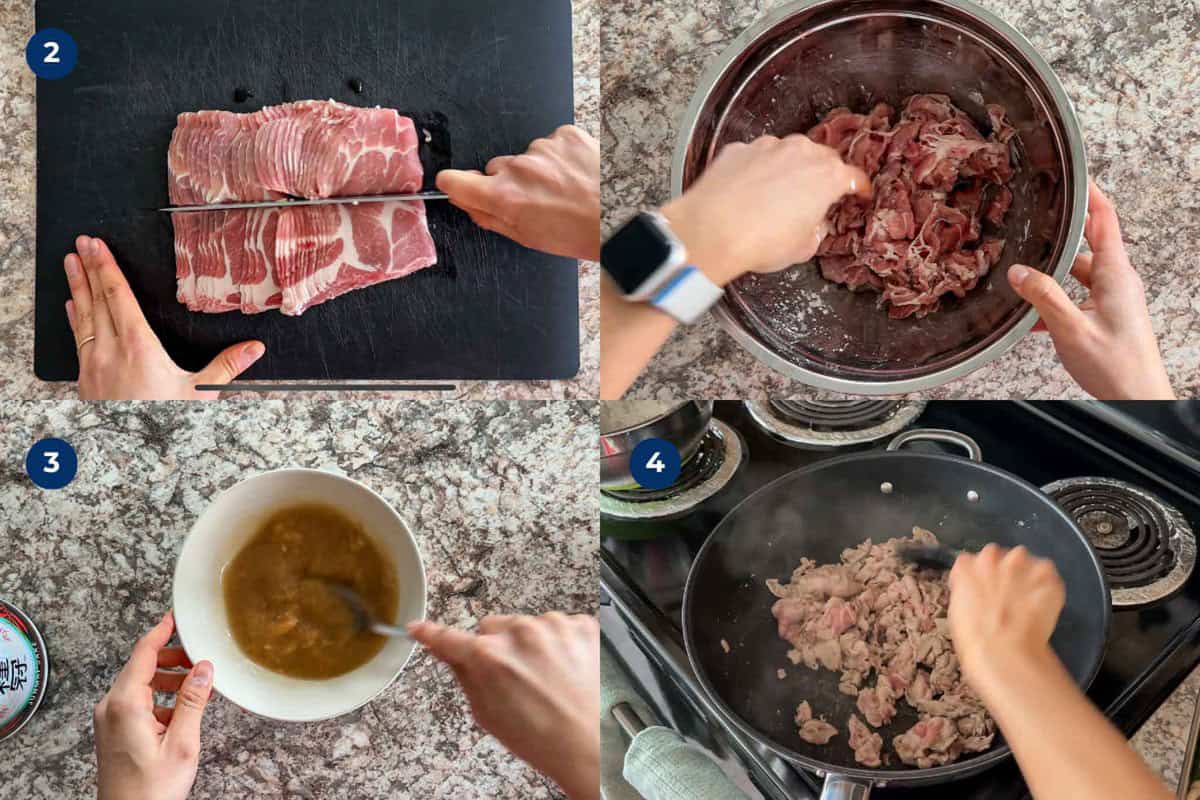
- Cut pork if needed, then knead with sake, salt, and black pepper. Coat with cornstarch.
- Mix the miso stir-fry sauce.
- Fry pork, then remove from pan.
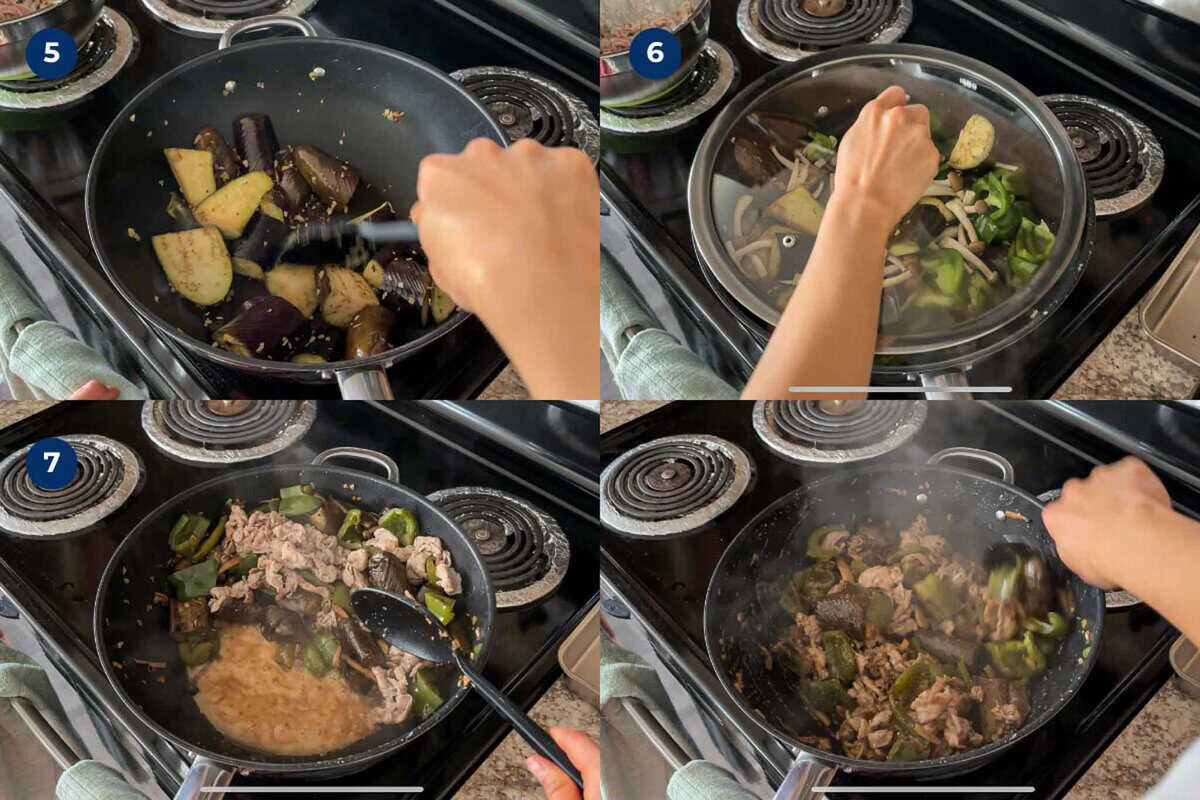
- Fry garlic and onion, then add eggplant.
- Add bell pepper and mushrooms, pour sake, cover, and steam 10-15 minutes.
- Return pork to pan. Make space, pour in miso sauce, let it bubble, then mix everything together.
Kurumi's Tips
- Season the pork separately: This makes the stir-fry more flavorful and keeps the pork moist and tender.
- Let the miso sauce bubble first: It helps evaporate the sake and prevents the stir-fry from getting soggy.
What to Serve with Japanese Miso Stir-Fry
Since this dish is packed with flavor and veggies, keep the sides simple. Serve with rice, a non-miso soup, and a few light sides like a Japanese tomato salad if you’d like.
Storage Instructions
Once the stir-fry has cooled, transfer it to an airtight container. Store in the fridge for up to 3 days or in the freezer for up to 2 weeks.
More Recipes with Miso
Looking for other recipes like this? Try these:
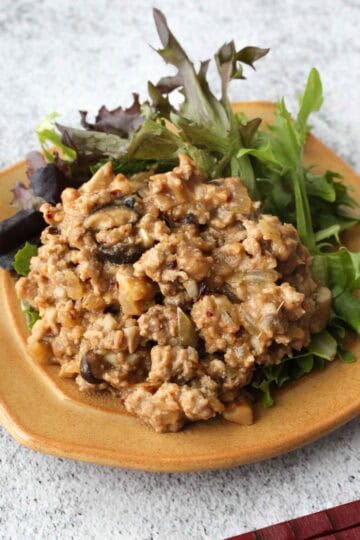



💌 If you tried this recipe and liked it, I’d love to hear from you! Leave a comment and review below or send a photo of your dish to my email. I’d be so happy to see your creation!
📖Recipe
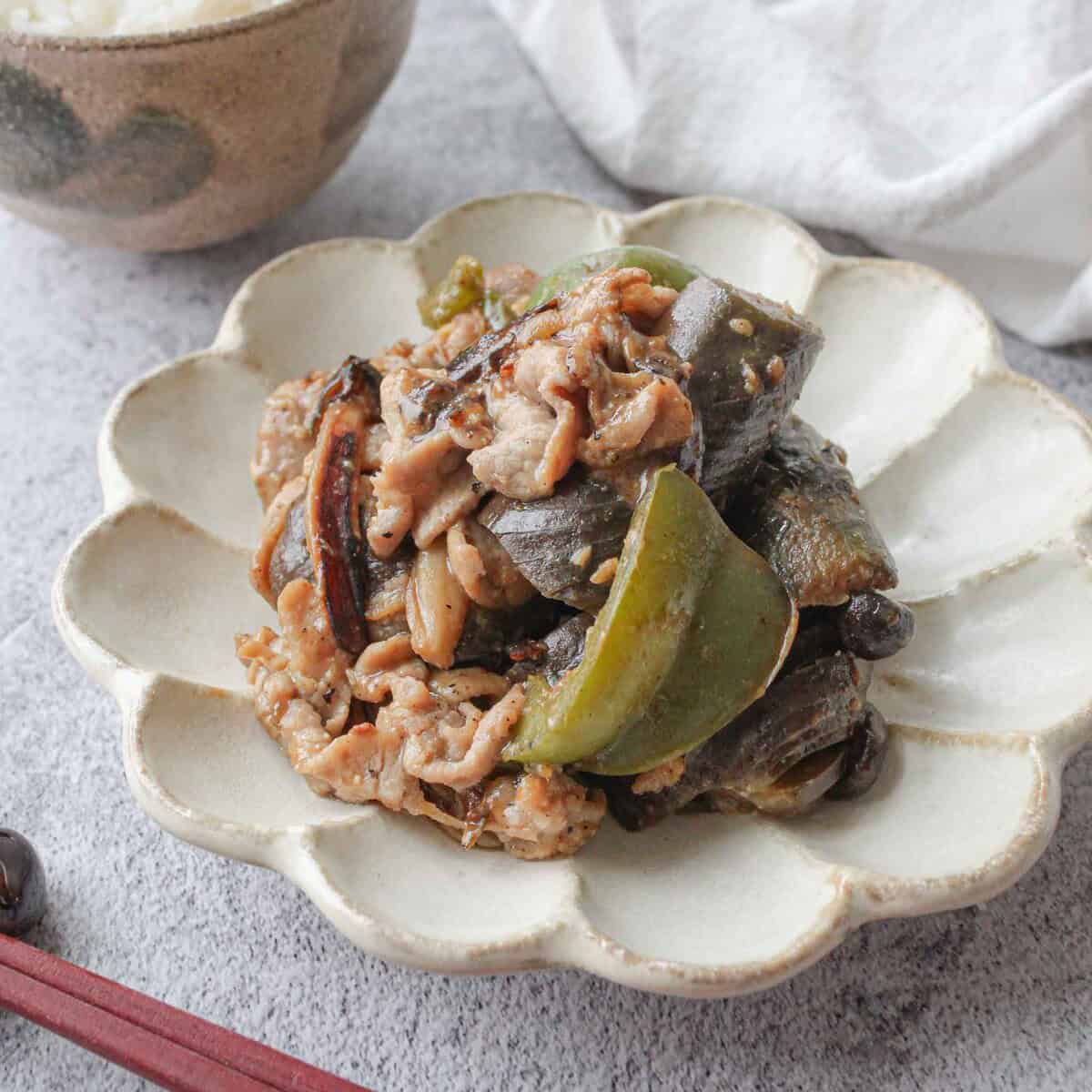
Japanese Miso Stir-Fry with Pork & Eggplant (Easy & Quick)
Ingredients
Method
- Prep the veggies: Mince garlic and ginger. Cut bell peppers into 1-inch / 3 cm pieces. Remove stems from shimeji mushrooms and separate. Slice eggplants in half lengthwise, make shallow diagonal cuts on the skin, then cut into 2-inch / 5 cm pieces. Soak eggplant in water for 5 minutes, then pat dry.2 garlic cloves, 1 tablespoon minced ginger, 2 green bell peppers, 1 pack shimeji mushrooms, 4 Japanese, Chinese, or Filipino eggplants
- Prep the pork: Cut pork into 2–3 inch / 6–7 cm pieces if needed. Place in a small bowl, season with sake, salt, and black pepper, and knead with your hands. Add cornstarch and knead again until well coated. Set aside.1 lb sliced pork collar or shoulder, 2 tablespoons sake, ⅛ teaspoon kosher salt, ⅛ teaspoon ground black pepper, 1.5 tablespoons cornstarch
- Mix the sauce: Combine miso, sake, and maple syrup in a small bowl.¼ cup miso, 2 tablespoons sake, 1.5 tablespoons pure maple syrup
- Cook the pork: Heat 1 teaspoon sesame oil in a pan over medium heat. Add pork and fry for about 3 minutes, until mostly cooked. Remove pork and set aside.1 tablespoon + 1 teaspoon Sesame oil
- Cook the veggies: Add 1 tablespoon of sesame oil to the same pan, then garlic and ginger. Once fragrant, add eggplant and stir-fry for about 3 minutes until it starts to char.1 tablespoon + 1 teaspoon Sesame oil
- Add remaining veggies: Add bell peppers and shimeji mushrooms, stir for 1 minute, then pour in sake. Cover and steam for 10–15 minutes, until eggplant is soft.2 tablespoons sake
- Combine pork and sauce: Return pork to the pan and stir lightly. Push ingredients to the edge to make space, pour in miso sauce, and wait until it bubbles. Let it bubble for another minute, then mix everything together.
Notes
- Ingredients
- Miso: Any type works; adjust sweetness/saltiness to taste.
- Pork: Collar or shoulder is ideal, but other meats or plant proteins work too.
- Eggplant: Japanese, Chinese, or Filipino eggplant is best; avoid American eggplant.
- Sake: Adds moisture, steam, and umami. Don’t swap with water.
- Veggies: Use what you have, but skip watery ones like tomatoes.
- Serving suggestions: Rice, a non-miso soup, and light sides like Japanese tomato salad.
- Storage: Keep in an airtight container in the fridge for up to 2–3 days or in the freezer for up to 2 weeks.
📌Pin This Recipe For Later!


Kurumi says
Before you start, make sure you have fresh rice ready, either warm or in the fridge. You’ll want it, trust me! This is one of my husband’s and my favorite weekday dishes because it’s so easy yet so satisfying. I hope you enjoy it too!