
In this post, I’ll walk you through the key ingredients to get started with Japanese cooking.
I’ve picked out a few must-have pantry staples so you won’t feel overwhelmed either by choices or by cost. You can always add more as you try new recipes!
💡Want a simple guide to start Japanese cooking? Check out our Step-by-Step Guide to Japanese Cooking Basics.
✏️Note (July 4, 2026): I've updated this post to reflect how my approach to Japanese cooking has evolved. Since I no longer use certain products regularly, I removed some sauces, dashi products, and bouillons from the list. I also updated my recommendations to include more additive-free options that I personally use and trust.
Jump to:
🥇5 Must-Have Condiments
Salt
I know everyone already has salt in their kitchen, but let me tell you... the simpler the dish is, the more important salt becomes. If I were going to spend extra money on just one condiment, it would be salt.
Sea salt is the most common type of salt used in Japan, and it’s also what I use most often. I love it because it tastes like the sea (in the best way, of course). Unrefined sea salt retains naturally occurring minerals and has a more complex flavor than refined salt, which can make even the simplest dishes taste noticeably better.
When choosing sea salt, here are a few things I look for:
- Does it contain any additives?
- Is it unrefined or minimally processed?
- How was it made? (Ideally, it’s solar-evaporated or made using the traditional flat-pan method.)
If you can’t find a good unrefined sea salt, other natural salts like rock salt or lake salt are also great options. In fact, whether the salt comes from today’s ocean, an ancient sea, or a salt lake is generally less important than how it was processed.
No matter which type of salt you choose, I recommend looking for one that:
- Contains no additives
- Is unrefined or minimally processed
For some kitchen tasks, like salting vegetables or boiling vegetables in salted water, I don’t think you need to use your fancy salt. A more affordable option works perfectly fine. I often use Diamond Crystal Kosher Salt because it’s inexpensive, dissolves easily, and doesn’t contain anti-caking agents.
Note: Some of you might be worried about iodine, but don’t worry! If you follow a traditional Japanese diet, which includes seaweed and seafood, you’ll be able to get enough iodine without using iodized table salt 🙂
🛒Recommended Products
- Unrefined sea salt
- Unrefined ancient sea salt
- For cooking “tasks”
Rice Vinegar
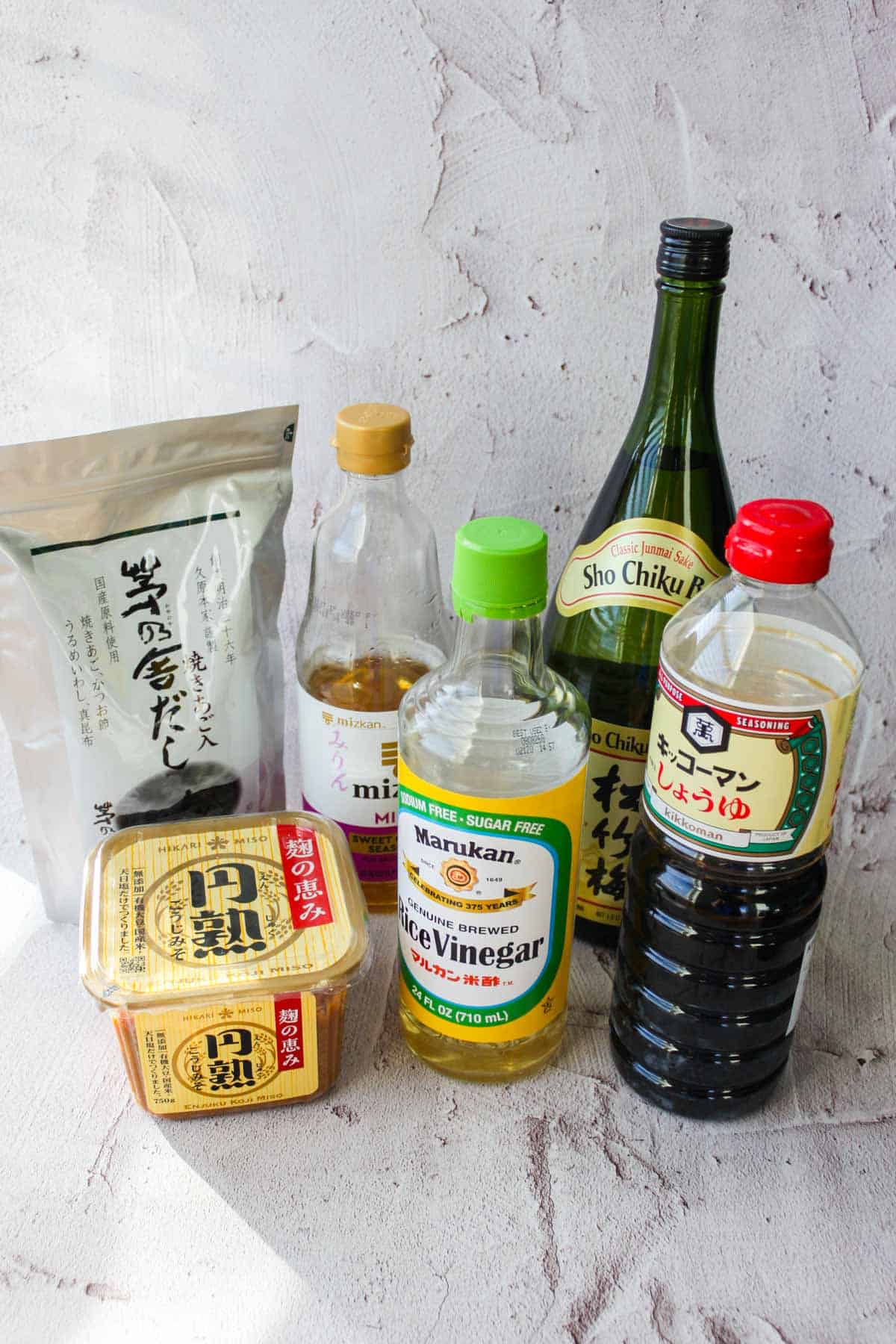
Japanese cooking mainly uses rice vinegar and grain vinegar, but rice vinegar is usually the easiest to find outside Japan.
It’s made by fermenting rice, koji, and water into sake first, and then adding acetic acid bacteria and aging it. This fermentation process gives it a mild sourness with a subtle natural sweetness from the rice.
I personally try to avoid seasoned rice vinegar or sushi vinegar, since they already contain added sugar and salt. They’re great for quick sushi rice, but they’re not the same as plain rice vinegar.
If you can, look for rice vinegar made with just rice and water.
That said, I’m not completely sure if this is a labeling regulation thing or just how it’s done here in the U.S., but rice vinegar labels often don’t show very detailed ingredients. Sometimes it just says something like “diluted rice vinegar,” which makes it a bit hard to tell exactly what’s inside.
In that case, I usually go for products labeled “genuine brewed” or “traditionally crafted.”
🛒Recommended Products
Soy Sauce
Soy sauce is made by mixing steamed soybeans, wheat, salt, and water, then letting it ferment and age before being pressed.
There are several types of soy sauce, but if you’re new to Japanese cooking, I recommend starting with koikuchi soy sauce, since it’s the most versatile.
When choosing soy sauce, look for one that:
- Is made only with the main ingredients (soybeans, wheat, salt, and water)
- Does not use GMO or defatted soybeans
- (Ideally) is traditionally brewed and aged for more than a year or two
🛒Recommended Products
- (More affordable) Kikkoman Organic Koikuchi Soy Sauce
- (Premium) Takesan Kishibori Soy Sauce
💡Learn more in All About Japanese Soy Sauce.
Miso
Miso is a fermented paste made by mixing steamed soybeans, koji, salt, and water, then allowing it to ferment and age for about a year or longer. It’s packed with umami and adds a deep, savory flavor to many dishes.
There are many types of miso, but if you’re just getting started, I recommend light-colored miso because it’s the most versatile.
When choosing miso, look for one that:
- Is made only with the main ingredients (soybeans, rice/barley/beans, salt, and water)
- Is made with non-GMO soybeans
- Is labeled as:
- 天然醸造 (naturally brewed)
- 長期熟成 (long-aged)
- 無添加 (no additives)
- 生みそ (raw/unpasteurized miso)
- (Ideally) is fermented and aged for about a year
I would also avoid miso that contains added dashi, since here we’re focusing on pure miso for cooking.
🛒Recommended Products
💡Want to learn more? Check out our Beginner's Guide to Miso.
Mirin (optional)
Mirin is a sweet rice wine made by mixing steamed sweet rice, koji, and shochu. It is then saccharified and aged for about six months, pressed and filtered, and aged again for another 6–12 months or longer.
It’s great for adding gentle sweetness and umami, helping remove fishy or meaty odors, and giving dishes a nice glossy finish.
There are several types of mirin, but the main ones you’ll see are hon mirin, which is the traditional, pure version, and mirin-type seasoning, which has added salt to avoid alcohol tax regulations.
When choosing mirin, look for one that:
- Is made only with the main ingredients (sweet rice, koji, and alcohol)
- (If it’s mirin-style seasoning) may also contain salt
If you can’t find good-quality mirin, or if it’s out of your budget, other natural sweeteners like maple syrup work well too. I would generally avoid mirin-style seasonings, since they often contain added sugar and other ingredients.
🛒Recommended Products
- Mirin-type seasonings:
- Hon mirin:
- You'll often need to look for this at liquor stores
💡Want more details? Check out Everything About Mirin.
🗄️Pantry Staples
These are the things that I make sure to stock up in my pantry to make a healthy, balanced meal every day.
Are these “essentials” for beginners? Maybe not except rice…? But if you want to make healthy Japanese meals every day, having these would help!
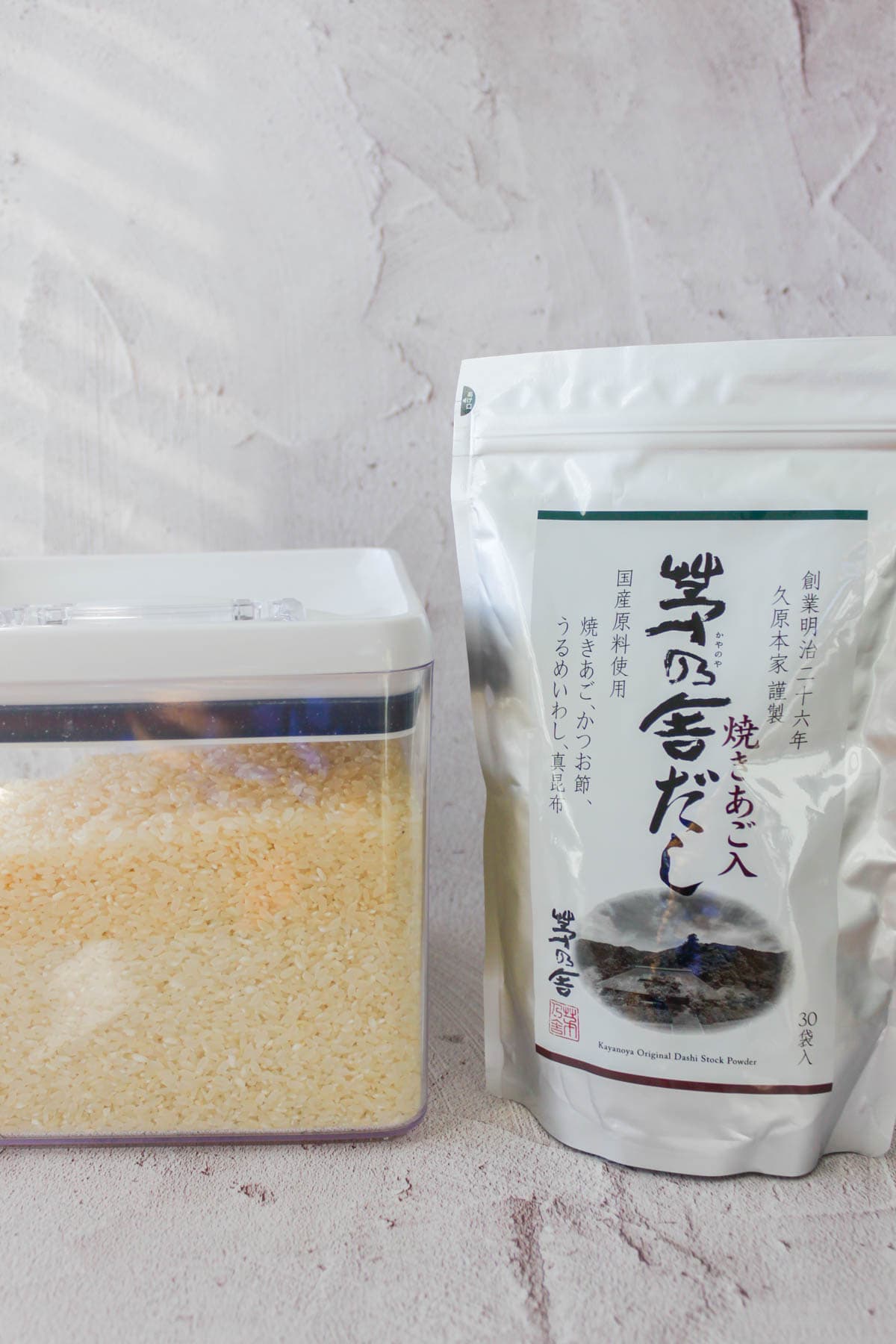
Medium- or Short-Grain Rice
If you don't already have medium- or short-grain rice in your pantry, please close your laptop (or put down your phone), head to the grocery store, and grab a bag right now. I do not allow you to eat miso soup with pasta or bread. Period.
Short-grain rice is the type most commonly eaten in Japan, but in the U.S., it's usually more expensive than medium-grain rice. That's why I almost always use medium-grain rice. Sometimes you have to be a little flexible when you're making Japanese food outside Japan😢
I personally use brown rice most of the time because it’s healthier than white rice and I simply like the taste. If you're not a big fan of brown rice but still want something a little more nutritious than white rice, I highly recommend haiga rice. It has a milder flavor and softer texture than brown rice while retaining more nutrients than white rice.
You can usually find these types of rice at Asian grocery stores or online. If you plan to cook Japanese meals regularly, I'd recommend buying a larger bag because it usually gives you a much better price per pound.
Oh, and one more thing... I'd skip the microwaveable rice packets if you can. They just don't taste nearly as good🙂
Quick note: Glutinous rice (mochigome, or sweet rice) is completely different from regular short- or medium-grain rice. It's much stickier and is mainly used for dishes like mochi and okowa, so it’s not for everyday meals.
🛒Recommended Products
- Medium-grain:
- Short-grain: Koshihikari Japanese Short Grain Rice
💡Want to know more? Check out the Complete Guide to Japanese Rice. (coming soon!)
Dried Ingredients
These are somewhere between pantry essentials and nice-to-have ingredients.
You don't need them when you're first getting started, but I always keep these in my pantry because they're incredibly helpful on days when my fridge is looking a little empty.
They also make it much easier to follow the Japanese eating framework called Mago Wa Yasashii, which encourages eating a variety of foods, including seaweed, beans, and vegetables.
If you're trying to build simple, balanced Japanese meals on a regular basis, these are worth stocking up on.
Dried Bonito Flakes (Katsuobushi)
I don't make dashi anymore, but I always have katsuobushi in my pantry. It's packed with umami and is one of the easiest ways to make a dish more flavorful.
I sprinkle it over tofu, vegetables, and rice, add it at the end of cooking, or mix it into rice with a little soy sauce. That combination is simple, but so good.
🛒 Recommended Product: Kaneso Hanakatsuo
Dried Seaweed (Wakame, Kombu, Hijiki)
Seaweed is one of those ingredients that's easy to skip when you're not used to cooking Japanese food, but dried seaweed makes it easier to include in your meals!
I keep a few different types on hand because each one is useful for different dishes.
- Cut wakame: Great for miso soup and quick salads.
- Cut or regular kombu: Great for asazuke (Japanese quick pickles) and simmered dishes. When I buy large pieces of kombu, I usually cut them into smaller squares before storing them.
- Hijiki: Perfect for traditional simmered hijiki dishes and easy side dishes.
🛒 Recommended Products:
- Cut wakame: Shirakiku Cut Wakame
- Cut kombu: Welpac Aokizami Kombu
- Hijiki: Welpac Hijiki
Kiriboshi Daikon (Dried Daikon Strips)
This is one of my secret pantry ingredients when I want to make a meal feel a little more hearty.
Kiriboshi daikon is daikon radish that has been dried in the sun, which concentrates its natural sweetness and umami.
It's also a great backup ingredient when you've run out of fresh vegetables!
You can use it in simmered dishes, salads, stir-fries, or really anything you like. There aren't many rules when it comes to cooking 🙂
🛒 Recommended Product: Eden Daikon Radish
🥈Nice-to-Have Ingredients (optional)
Sake
In Japanese, “sake” simply means alcohol, but in cooking, it usually refers to either cooking sake or regular drinking sake (seishu).
I generally avoid cooking sake because it often contains added salt and other ingredients. And you definitely don’t need expensive drinking sake for cooking. Anything inexpensive from a liquor store works perfectly fine!
Sake is useful in some situations, like thinning miso or adding a bit of depth and umami to a dish, but it can also be substituted with water if you don’t have it on hand. So I’d say it’s nice to have, but not absolutely essential.
🛒 Recommended Products
- Sho Chiku Bai Classic Junmai
- Gekkeikan
💡 Learn more in our Beginner’s Guide to Sake.
Ponzu
Think of ponzu as a citrusy version of soy sauce.
It's salty, tangy, and packed with umami, which makes it incredibly versatile. You can use it as a dressing, a dipping sauce, or even as a seasoning while cooking.
I used to buy bottled ponzu, but many store-bought versions contain a lot of additives, so these days I make my own instead. It's surprisingly simple: just combine soy sauce and citrus juice in a 1:1 ratio, add a piece of kombu, and let it sit in the refrigerator for a couple of days.
I'm honestly not sure whether ponzu belongs in a list of pantry essentials because I usually make it rather than buy it. But I decided to include it anyway because it's something I always keep in my fridge and use all the time.
🍳What's Next?
Now that your pantry is stocked with the essentials, it's time to start cooking!
Building Japanese meals doesn't have to mean spending hours meal prepping or making everything from scratch.
I made a video showing how I put together healthy Japanese meals without doing a lot of meal prep, so be sure to check it out.
Happy cooking!
📌Pin This Guide For Later!
Comments
No Comments